

Why Wheel Alignment Matters After Temperature Fluctuations: A Summer Guide for Indiana Drivers
Auto Maintenance and Car Care
As Indiana moves from spring into summer, your vehicle may be dealing with more than just changing weather. The same seasonal shift that brings longer days and rising heat also reveals the hidden impact the past several months have had on your car. Months of temperature fluctuations and pothole impacts can gradually push your wheels out of alignment without a single dramatic event. These subtle shifts may not feel obvious at first, but they can significantly affect vehicle handling, tire wear, and overall driving performance. Common signs of wheel alignment problems heading into summer often appear early in the season. You may notice your car drifting on a straight road or a steering wheel that no longer sits centered. While many drivers attribute these symptoms to uneven road surfaces, they are often caused by seasonal stress on suspension components. According to the Federal Highway Administration, freeze-thaw cycles accelerate pavement deterioration, increasing potholes and road hazards that directly contribute to alignment problems. A summer wheel alignment check is not just routine maintenance. It is a proactive step to protect your tires, fuel efficiency, and vehicle control.
What Wheel Alignment Actually Means
Wheel alignment is not a standalone adjustment. It is the result of multiple suspension and steering components working together to maintain proper geometry. Each alignment angle directly influences how your vehicle feels on the road.
There are three main alignment angles every driver should understand:
- Camber angle and tire contact: Camber affects how evenly your tires make contact with the pavement. A tire leaning too far in or out wears unevenly and reduces grip.
- Toe: This angle determines whether your tires point slightly inward or outward. An incorrect toe causes your vehicle to pull to one side and is one of the most common causes of uneven tire wear from misalignment.
- Caster: Caster affects steering stability and control, particularly at highway speeds. When the caster is off, the steering can feel vague or require constant correction to keep the car straight.
This precision is maintained by the suspension system, which comprises metal components, rubber bushings, ball joints, and tie rod ends. Each of these materials responds differently to temperature changes. Metal expands and contracts with heat and cold, while rubber components stiffen in freezing conditions and become more flexible as temperatures rise. During an Indiana winter, these shifts occur frequently, placing continuous stress on the system and gradually affecting its ability to hold proper alignment.
How Temperature Fluctuations Disrupt Wheel Alignment
The impact of temperature fluctuations on wheel alignment develops through multiple layers. It begins at the material level within the suspension system and extends outward to tire performance and road conditions. Together, these factors create a cumulative effect that gradually pushes alignment out of specification.
The Physics of Thermal Expansion and Contraction
Temperature fluctuations directly influence the structural behavior of suspension components. Metal expands when heated and contracts in cold conditions, causing continuous dimensional changes throughout the colder months. In regions like Indiana, where temperatures can shift from near 14 degrees Fahrenheit to above 50 degrees Fahrenheit within a single day, these thermal expansion and contraction cycles occur frequently and with significant intensity. Over weeks and months, repeated temperature swings gradually create stress that leads to alignment deviation. Rubber components, particularly bushings, are even more sensitive to temperature variation. These parts are designed to absorb vibration and maintain stability between suspension elements. Cold temperatures stiffen and reduce the elasticity of rubber, reducing its ability to return to its original shape. When a bushing loses its ability to compress and return properly, it does not hold its component as precisely as it should. By the time summer arrives, bushings that have been through months of freeze cycles may be slightly worn or cracked, allowing increased movement within the suspension system and reducing alignment precision.
Tire Pressure Changes and Their Effect on Alignment
Temperature changes also affect tire pressure, which is critical to maintaining proper vehicle geometry. The National Highway Traffic Safety Administration states that tire pressure decreases by approximately 1 PSI for every 10-degree Fahrenheit drop in temperature. Over the course of a typical Indiana winter, this can result in significant pressure swings between cold mornings and warmer afternoons. Reduced tire pressure alters the contact patch, which is the portion of the tire that meets the road surface. This change affects how weight is distributed across the vehicle and can place uneven stress on suspension components. When tire pressure and wheel alignment are both out of range, the effects compound. Over time, these imbalances can influence alignment readings and accelerate uneven tire wear.
Freeze-Thaw Cycles and Indiana Road Conditions
Beyond internal mechanical changes, temperature fluctuations also reshape the driving environment itself. In Indiana, freeze-thaw cycle suspension damage is one of the primary causes of alignment issues over a winter season. According to a 2024 analysis by USA Today, Indiana ranked as the fifth-worst state in the country for potholes, and that is not a coincidence. Indiana’s climate falls within the temperature band where freeze-thaw cycles are most destructive to road surfaces. This process begins when water seeps into small cracks in the pavement. As temperatures drop, the water freezes and expands, widening those cracks. When temperatures rise, the ice melts, leaving behind weakened gaps beneath the surface. Repeated cycles of freezing and thawing gradually weaken the road’s structural integrity. In Marion County, the Department of Public Works received 3,428 pothole complaints by early February 2024, and crews filled nearly 20,000 potholes using more than 260 tons of cold-mix material during the peak freeze-thaw season. By 2025, Indianapolis crews had filled approximately 64,000 potholes, with thousands more still requiring repair. For vehicles, each encounter with a pothole introduces small amounts of stress to suspension components. While a single impact may not cause noticeable damage, repeated exposure over a full season can gradually shift alignment angles. This makes freeze-thaw cycle road damage a critical external factor that, alongside material stress and tire pressure changes, disrupts wheel alignment.
Why Wheel Alignment Matters More Than Most Drivers Realize
Wheel alignment issues rarely present themselves as immediate failures. Their impact develops gradually, affecting multiple aspects of vehicle performance, safety, and operating cost. What begins as a minor deviation in alignment angles can lead to long-term consequences if left unaddressed.
Uneven Tire Wear and Reduced Tire Life
One of the earliest and most consistent effects of wheel misalignment and tire wear is an uneven wear pattern. When alignment angles such as camber or toe fall outside of specification, the tire no longer makes even contact with the road surface. This leads to irregular wear, such as feathering or excessive wear along the inner or outer edges. Research from Bridgestone indicates that a wheel misalignment as small as 0.17 inches can reduce tire life by up to 25 percent. According to the National Highway Traffic Safety Administration, tire-related issues contributed to 646 fatalities in the United States in 2023. While not all cases are directly caused by misalignment, misalignment-induced uneven tire wear is a known factor that can compromise tire integrity and increase the risk of failure. Catching an alignment problem before it destroys a tire is not just about saving money on replacement rubber. It is about keeping the tire structurally sound and the vehicle safe.
Increased Rolling Resistance and Fuel Consumption
Proper wheel alignment ensures that tires roll efficiently in the intended direction of travel. When alignment is off, tires may point slightly inward or outward, creating additional friction against the road surface. This increases rolling resistance, forcing the vehicle to use more energy to maintain speed. It is estimated that a 10 percent reduction in tire rolling resistance can yield a 1 to 2 percent improvement in vehicle fuel economy, underscoring how even small inefficiencies can impact overall performance. The NHTSA highlights that proper tire maintenance, including correct inflation and wheel alignment, and fuel efficiency, plays a measurable role in reducing operating costs over time.
Reduced Handling, Stability, and Driver Control
Wheel alignment plays a critical role in how a vehicle responds to steering input. When alignment angles shift, the vehicle may pull to one side, require constant steering correction, or feel less stable at higher speeds. These changes can be subtle at first but become more significant under demanding conditions such as wet roads, sudden lane changes, or emergency braking. Reduced handling precision increases the risk of delayed response in situations where vehicle handling and alignment are most critical. Over time, this can also contribute to driver fatigue, as continuous small corrections are required to keep the vehicle tracking straight.
Signs Your Wheels May Need Alignment This Summer
After months of freezing temperatures, potholes, and rough road conditions, summer is an ideal time to evaluate wheel alignment. These problems often develop gradually, making them easy to overlook. The following signs can indicate that alignment has shifted during the winter season.
- Vehicle pulling to one side: If the vehicle consistently drifts to the left or right on a flat, straight road, it is a common indication that the wheels are no longer properly aligned.
- Off-center steering wheel: A steering wheel that must be held slightly left or right to maintain a straight path is a reliable sign of misalignment.
- Uneven or rapid tire wear: When wheel alignment is off, tires do not make consistent contact with the road surface. This leads to uneven wear patterns, including edge wear or feathering, and can cause tires to wear out faster than expected.
- Steering instability or vibration: Misaligned wheels can cause the steering to feel loose, less responsive, or to produce vibrations, particularly at higher speeds.
- Loose or vague steering: If steering feels unresponsive or requires constant correction, it may be due to alignment or suspension system components.
- Steering does not re-center properly: After completing a turn, the steering wheel should return to center naturally. If it does not, it may indicate a problem with wheel alignment or suspension components.
At Collision Restoration, summer wheel alignment checks are a key part of post-season vehicle inspections. Indiana’s seasonal road conditions can significantly affect suspension geometry, and a professional alignment check ensures optimal driving performance, tire longevity, and driver safety across Zionsville, Noblesville, Westfield, Pendleton, and Greenfield.
What a Summer Alignment Check Should Include
A proper wheel alignment service should go beyond basic measurement and adjustment. After a season of temperature fluctuations, pothole impacts, and road salt exposure, a thorough inspection is essential to ensure alignment corrections are accurate and long-lasting. Here is what a complete summer alignment check should cover:
- Suspension component inspection: A proper alignment service begins with a visual inspection of key suspension and steering components, including ball joints, tie rod ends, and control arm bushings. If any of these parts are worn, loose, or damaged, alignment adjustments alone will not hold. Addressing the underlying component wear first is critical to maintaining proper alignment.
- Tire pressure and alignment accuracy: Tire pressure should be set to the manufacturer’s recommended cold inflation level before any alignment readings are taken. Incorrect pressure can affect ride height and skew alignment measurements, leading to corrections that are off from the start.
- Structural impact evaluation: Any signs of structural impact, such as bent control arms or subframe misalignment, should be evaluated before alignment work begins. These issues cannot be corrected through alignment adjustments alone and require separate repair.
- Camber, caster, and toe measurements: Alignment readings for camber, caster, and toe should not only fall within acceptable ranges but also be as close as possible to the manufacturer’s optimal specifications. This ensures proper vehicle handling, tire wear, and driving stability, especially after seasonal stress.
- Post-adjustment road test: A road test after alignment confirms that the vehicle tracks straight, the steering wheel is centered, and there are no lingering pulls or vibration issues. This step ensures the alignment work is complete and accurate.
Summer Maintenance Checklist for Indiana Drivers
A summer vehicle maintenance checklist should address all the systems that winter conditions put under stress. Wheel alignment is the priority, but it works best when paired with these related checks:
- Suspension component inspection: Have all bushings, ball joints, and tie rod ends visually inspected. Worn or cracked parts will cause alignment to drift again quickly after adjustment.
- Tire pressure and tread depth check: Set pressure to the manufacturer’s recommended cold inflation level. Check tread depth across the full width of each tire to catch uneven wear patterns early.
- Brake system inspection: Seasonal driving conditions accelerate brake pad and rotor wear. A visual inspection of brake components should accompany any summer service.
- Fluid levels and condition: Engine oil, coolant, brake fluid, and power steering fluid should all be checked after winter. Cold temperatures affect fluid viscosity and can mask leaks that become visible once temperatures rise.
- Battery test: Cold temperatures significantly reduce battery output. Summer is the right time to test battery health before heat adds additional stress to the system.
- Wiper blades and lighting: Harsh weather takes a toll on wiper blade condition and can expose wiring issues in exterior lighting. Replacing worn wipers and confirming that all lights are functional are straightforward steps that improve visibility and safety.
- Wash and inspect the undercarriage: Road salt accumulates under the vehicle over the past season and accelerates corrosion on brake lines, exhaust components, and frame elements. A thorough undercarriage wash and inspection is advisable before corrosion becomes a structural concern.
Why You Should Choose a Certified Shop for Wheel Alignment
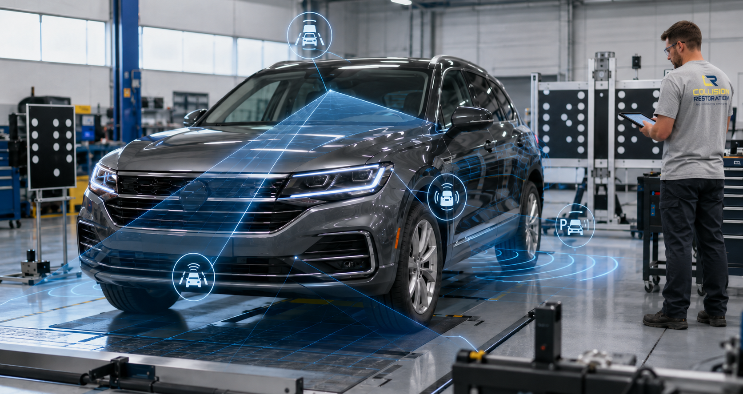
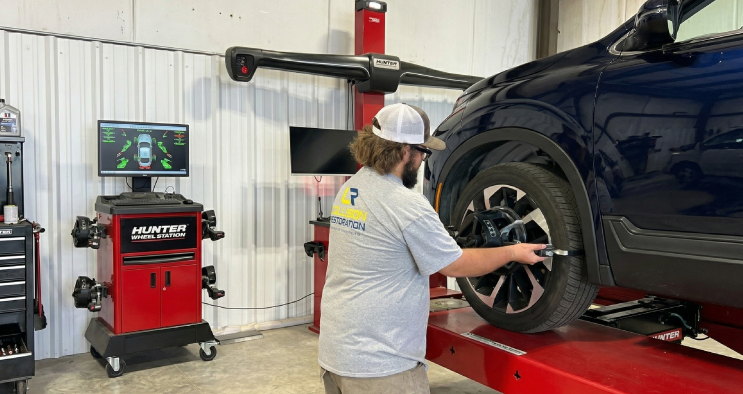
Not all alignment services are performed to the same standard. A proper wheel alignment service in Indiana requires computerized alignment equipment that compares your vehicle’s current geometry against manufacturer specifications. Shops without this equipment rely on manual measurements that are far less accurate and cannot detect subtle misalignment that still affects tire wear and handling. Choosing a shop with trained technicians also matters for the accuracy of the diagnosis. Worn suspension components, structural damage from pothole impacts, or a combination of both can cause alignment issues. A technician who inspects the full suspension system before making adjustments will produce results that last. One who only adjusts the alignment without addressing the underlying component wear will deliver a correction that drifts again within weeks. Collision Restoration serves drivers across central Indiana from five locations in Zionsville, Noblesville, Pendleton, Greenfield, and Westfield. Our team performs post-season suspension component inspections alongside alignment checks to ensure corrections are based on a complete picture of the vehicle’s condition. If underlying components need attention, we identify and address them before making alignment adjustments.
Frequently Asked Questions
How often should I get a wheel alignment in Indiana?
Most vehicle manufacturers recommend a wheel alignment check every 12 months or every 12,000 miles, whichever comes first. For Indiana drivers who experience regular freeze-thaw cycles and pothole-heavy roads, an additional check heading into summer is a sensible precaution regardless of mileage.
Can I drive with a misaligned vehicle?
You can, but it is not advisable for any extended period. Driving with misaligned wheels accelerates tire wear, reduces fuel efficiency, and gradually compromises handling. In situations that require quick steering responses, such as emergency braking or sudden lane changes, a misaligned vehicle is measurably less safe than a properly aligned one.
Does a pothole always cause an alignment problem?
Not every pothole impact causes an immediate alignment problem, but repeated exposure to potholes over the past season creates cumulative stress on suspension components. A single major impact can shift alignment in one encounter. The more common scenario is gradual wheel alignment deviation from potholes, where the effect builds over time and becomes noticeable once tire wear or steering drift is evident.
How long does a wheel alignment service take?
A standard wheel alignment service time is typically between 45 minutes and one hour for a straightforward four-wheel alignment. If suspension components need to be inspected or replaced first, additional time should be planned for. A shop that performs a thorough inspection before alignment will generally achieve more accurate, longer-lasting results.
Conclusion
Indiana winters do not just damage roads. They place gradual, often unnoticed stress on your vehicle, affecting components in ways that may not become obvious until tire wear appears or handling begins to change. Wheel alignment after temperature fluctuations is not just a precaution. It is essential maintenance for any vehicle that has gone through a full season of Midwest road conditions. If your vehicle has experienced a full season or is showing any of the signs described in this guide, a professional inspection is a practical next step. For drivers in central Indiana, the team at Collision Restoration offers summer wheel alignment checks designed to identify both visible and underlying issues caused by seasonal conditions. Drivers in Zionsville, Noblesville, Westfield, and Pendleton can request a free estimate online or visit autocollisionrestoration.com to schedule a service and ensure their vehicle is ready for the months ahead.
Categories
- Accident Recovery (3)
- Auto Maintenance and Car Care (1)
- Auto Parts Guide (1)
- Auto Repair Tips (1)
- Car Care & Maintenance (1)
- Collision Repair Standards (2)
- Consumer Rights (2)
- Industry News & Trends (1)
- Paintless Dent Repair (1)
- Vehicle Safety & Structural Integrity (2)
- Vehicle Technology and Repair (2)
- Warranty & Peace of Mind (1)