

How the GRIND Mentorship Program is Shaping the Future of Collision Repair
Industry News & Trends
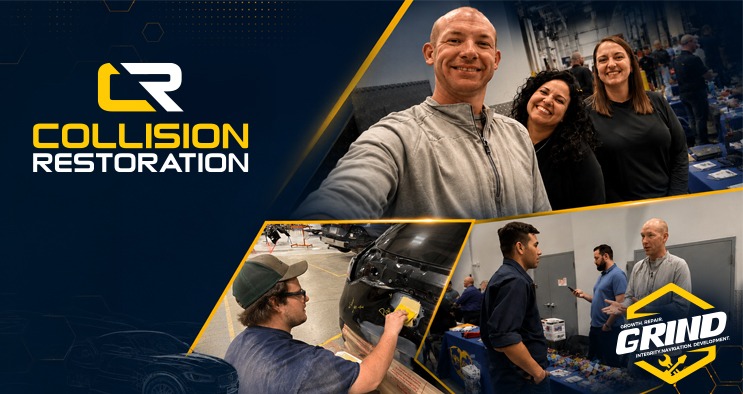
Every vehicle that enters a collision repair facility represents more than a job to be completed. It carries a responsibility to restore safety, performance, and trust for the driver returning to the road. Meeting that standard requires more than tools and certifications. It calls for a deep understanding of the craft, developed through experience and guided learning. For new technicians entering the field, the transition from learning to doing is often one of the most defining stages of their career. This is where mentorship becomes essential, and it is the foundation of the GRIND mentorship program at Collision Restoration. GRIND stands for Guidance, Resilience, Industry Knowledge, Networking, and Development. The program connects apprentices and junior technicians with seasoned professionals who have spent decades working hands-on in the field. It creates an environment where knowledge is shared with intention and applied with precision. These mentors do more than oversee repairs. They instill discipline, reinforce attention to detail, and emphasize the importance of every step in the process. Through daily guidance, real-time problem solving, and a shared commitment to excellence, the program helps develop technicians who are both capable and confident. The result is a stronger workforce, higher repair standards, and a more sustainable future for the collision repair industry.
What Makes GRIND Mentorship Essential in the Collision Repair Trade
The collision repair industry workforce is facing a challenge that has been building for years. According to the TechForce Foundation 2023 Technician Supply and Demand Report, the automotive, diesel, and collision repair industries are projected to need 795,000 new technicians over the next 4 years. That is not a number that trade schools and community colleges can fill on their own. Separate data from the Bureau of Labor Statistics’ collision repair job outlook projects more than 130,000 collision repair technician job openings between 2023 and 2033, with most created not by industry growth but by experienced technicians retiring from the field.
The industry has also changed significantly in the past decade. Modern vehicles are built with advanced high-strength steel, aluminum alloys, carbon fiber components, and a web of electronic safety systems that interact with the vehicle’s physical structure. According to IIHS research on driver-assistance safety benefits, modern safety systems such as lane assist and automatic emergency braking have significantly reduced the likelihood of crashes. However, these features also mean that even a minor collision can involve recalibration of intricate systems that require specific training and equipment to address properly.
For a young technician just starting, mastering these repairs cannot be learned from a manual alone. By pairing experienced OEM-certified technicians with apprentices, the GRIND program ensures that every repair meets manufacturer standards while providing structured, hands-on collision repair training that builds lasting and transferable capability.
Why Mentorship Matters in Collision Repair
In collision repair, the difference between a completed job and a correct repair comes down to experience, judgment, and accountability. As vehicles become more complex and repair standards continue to rise, developing that level of capability does not happen in isolation. It is built through a structured collision repair mentorship, where knowledge is shared, refined, and applied in real working conditions. Mentorship not only shapes better technicians; it strengthens consistency, reinforces safety, and supports the long-term future of the trade.
Safety Is the Foundation of Every Repair
Collision repair is ultimately about protecting lives. A poorly executed repair can compromise a vehicle’s structural integrity and safety and put occupants at risk in a future accident. Mentorship ensures that technicians understand not just how to perform a repair but why each step matters and what the consequences are when a procedure is skipped or rushed. That kind of grounded understanding is built through direct, guided experience, not through reading alone.
Bridging the Gap Between Theory and Real-World Practice
Technical training provides a foundation, but real vehicles present unpredictable challenges that no classroom exercise can fully replicate. Mentors help technicians apply their knowledge in live, real-world repair environments where accuracy and timing matter. They bridge the gap between the procedure on paper and the judgment required to execute it correctly in practice.
Keeping Up with Rapidly Changing Technology
From advanced materials to evolving safety systems, modern vehicles require continuous learning. A technician trained exclusively on vehicles from several years ago may not be equipped to handle the newer platforms arriving in shops. Collision repair mentorship programs help technicians stay current and apply new repair methods with confidence and precision as vehicle technology continues to evolve.
Building Confidence and Independence
Early in their careers, many technicians hesitate when making decisions under pressure. With guided experience alongside a seasoned mentor, they begin to take ownership of their work while knowing that support is available when needed. Over time, this guided independence becomes genuine competence that holds up even in complex and unfamiliar repair situations.
Developing Critical Thinking and Problem-Solving
Every repair presents unique challenges that may not be apparent at first inspection. Mentors teach technicians how to assess damage thoroughly, look beyond the obvious, and adjust their approach when conditions change. Over time, this builds stronger judgment and a more methodical approach to complex collision repair situations.
Preserving Craftsmanship in the Trade
High-quality collision repair is built on discipline, technique, and attention to detail. Mentorship ensures these standards are consistently passed down and upheld across every repair and every generation of technician entering the field. Without deliberate mentorship, those standards risk being diluted as experienced professionals retire.
Creating the Next Generation of Leaders
Today’s mentees become tomorrow’s mentors. A strong collision repair mentorship culture develops leadership within the shop, strengthens teams, and supports long-term industry growth by keeping experienced knowledge in active circulation rather than allowing it to retire from the field.
What a GRIND Mentor Actually Does
The title of mentor can vary widely across programs. In some environments, it may involve occasional check-ins or oversight from a distance. The GRIND apprenticeship program is built on a more direct and hands-on approach. Mentors work alongside apprentices, guiding them through real repairs, explaining decisions in real time, and creating opportunities for active learning rather than passive observation.
Slowing Down to Explain the Why
Technicians with years of experience often operate on instinct built through thousands of hours of practice. GRIND mentors make that instinct visible by explaining the reasoning behind each step: why a certain area is inspected first, why a sequence matters, or why a specific approach is chosen over an alternative. These explanations form the foundation of a real, transferable understanding that a developing technician can carry into every future repair.
Teaching Technicians to See Beyond the Obvious
Collision damage is not always visible on the surface. Mentors train technicians to look deeper, evaluating structural alignment, adjacent components, and areas that may appear unaffected by the initial impact. This approach builds a more complete and accurate repair process that accounts for the full scope of damage rather than only what is immediately visible.
Allowing Mistakes in a Controlled Environment
One of the most effective ways to learn is through doing. GRIND mentors create an environment where apprentices can take on responsibility, make controlled mistakes, and learn from them without compromising safety or repair quality. These experiences build confidence and reinforce lasting collision repair skills that hold up when the direct supervision ends.
The Standards That Make Mentorship Matter
Mentorship in collision repair is only as strong as the standards behind it. Effective training is not just about passing along experience. It is about teaching technicians to work with discipline, consistency, and habits that hold up under real-world pressure. To achieve that, mentorship must be supported by a clear and structured framework.
The GRIND program grounds its training in an OEM-certified repair environment. Original equipment manufacturer certifications require repair facilities to follow precise procedures established by the vehicle manufacturer. These standards define everything from approved materials and repair methods to where welds can be placed, when components must be replaced instead of repaired, and how safety systems are inspected and recalibrated after the work is complete.
For mentors, this creates a consistent and reliable framework for teaching. Apprentices are not learning based on habit or assumption. They are trained to perform repairs in accordance with verified, manufacturer-approved procedures. This approach helps technicians develop correct practices from the start, rather than having to unlearn costly habits later in their careers.
For vehicle owners, the impact is equally significant. Repairs completed to OEM standards help restore a vehicle’s structural integrity to its original design. In the event of a future collision, systems such as crumple zones, airbags, and reinforced safety structures depend on that accuracy to function properly. Mentorship grounded in OEM standards leads to safer repairs, more consistent results, and greater long-term trust in the work.
The Future of Collision Repair: Why Mentorship Is More Critical Than Ever
As vehicles continue to evolve, so too must the technicians who repair them. The National Highway Traffic Safety Administration reports that the adoption of electric vehicles and autonomous technologies is expected to grow significantly by 2030. These advancements bring new materials, battery systems, and repair protocols that require specialized electric vehicle repair training alongside traditional collision repair skills.
Programs like GRIND ensure that developing technicians are prepared to meet these challenges. By combining traditional collision repair craftsmanship with cutting-edge technology, mentors are creating a new generation of technicians who are as skilled with a welder as they are with a diagnostic scanner. That combination of foundational craft and modern technical knowledge is exactly what the industry will need as vehicle platforms continue to advance.
What Apprentices Say They Actually Need
The mentorship research within the collision repair industry points in a consistent direction. The I-CAR 2024 technician satisfaction survey found that 91 percent of very satisfied technicians report overall job satisfaction, compared to just 33 percent of dissatisfied technicians. This gap highlights the direct connection between structured high-quality technician training and long-term engagement, performance, and retention within the industry.
What apprentices consistently report wanting from a mentor is not just technical instruction. They want context. They want to understand not only how to do something but also why that particular method matters, what happens when it is done incorrectly, and how it connects to the larger goal of restoring a vehicle to its condition before the collision. When mentors provide that context, the learning becomes purposeful rather than procedural.
The GRIND collision repair mentorship program is structured to address this directly. Mentors are not just assigned; they are selected based on their communication skills and patience with the learning process, not only their technical credentials. A master technician who cannot slow down to explain their thinking is not well-suited for this role, regardless of how skilled they are under a vehicle.
How Collision Restoration Is Supporting the Next Generation
Mentorship is just one part of the equation. At Collision Restoration, we are committed to supporting our technicians with the resources and environment they need to develop into skilled, confident professionals.
OEM certification training: Ensuring that every repair meets the highest standards set by vehicle manufacturers and that every technician is trained on the approved procedures for the platforms they service.
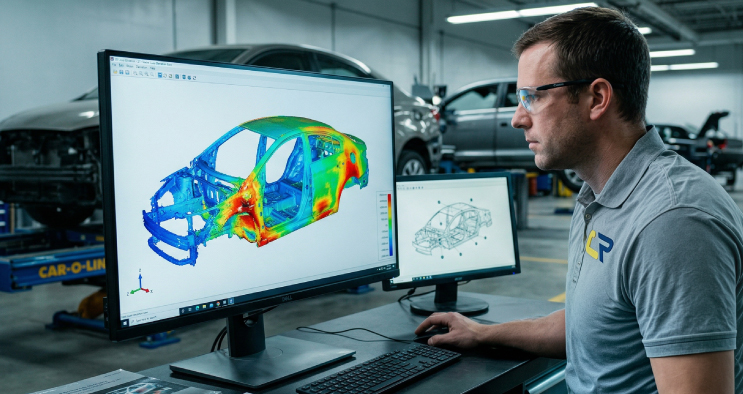
State-of-the-art repair equipment: From laser frame-measurement systems and belt sanders to the specialized equipment used in everyday collision repairs, technicians gain practical experience with the tools they will rely on throughout their careers.
A culture of excellence: By fostering collaboration and continuous learning, we have built a team that takes pride in delivering repairs that prioritize safety and quality above all else.
Conclusion
The collision repair industry is facing a growing workforce challenge. The TechForce Foundation 2023 Technician Supply and Demand Report projects a need for 795,000 new technicians across automotive, diesel, and collision repair between 2023 and 2027. This growing demand makes it clear that recruitment alone is not enough to close the gap. The solution lies in how technicians are trained and developed. Shops that invest in a structured collision repair mentorship program create stronger teams, more consistent repair quality, and a more reliable pipeline of skilled professionals. Training that combines real-world repair experience with clear manufacturer standards ensures technicians are prepared to meet the demands of modern vehicles. Programs like GRIND reflect that commitment. By pairing developing technicians with experienced mentors in an OEM-certified repair environment, GRIND helps build the skills, discipline, and accountability the collision repair industry depends on. To learn more about the GRIND mentorship program and how Collision Restoration is investing in the future of collision repair, connect with our team or visit us to see how our training-first approach translates into safer, higher-quality repairs.
Categories
- Accident Recovery (3)
- Auto Maintenance and Car Care (1)
- Auto Parts Guide (1)
- Auto Repair Tips (1)
- Car Care & Maintenance (1)
- Collision Repair Standards (2)
- Consumer Rights (2)
- Industry News & Trends (1)
- Paintless Dent Repair (1)
- Vehicle Safety & Structural Integrity (2)
- Vehicle Technology and Repair (2)
- Warranty & Peace of Mind (1)