

Beyond the Dent: A Technician’s Guide to Identifying Hidden Structural Damage After a Collision
Auto Repair Tips
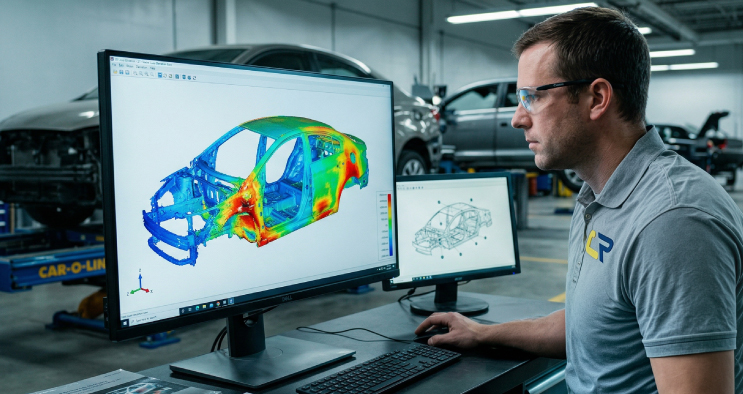
After years of inspecting collision-damaged vehicles, one phrase stands out above all others: “It didn’t seem that bad.” And in some cases, that assessment is fair. But more often, the most serious damage is not what you can see. Hidden structural damage is quiet. It does not trigger a warning light or immediately render a vehicle undrivable. Instead, it quietly alters how a vehicle absorbs impact, distributes force, and ultimately protects its occupants. What appears minor on the surface can, beneath it, reshape the vehicle’s ability to perform safely in the next collision. For certified technicians, this is where real expertise matters. Identifying these underlying issues requires more than a visual check. It demands a methodical approach, trained judgment, and a deep understanding of modern vehicle construction. This guide walks you through what structural damage actually is, how to spot early warning signs, what a proper collision inspection involves, and why choosing the right collision repair shop makes all the difference.
Why a Minor Collision Is Rarely That Simple
According to NHTSA’s 2024 Crash Investigation Sampling System, an estimated 2.87 million police-reported crashes occurred in the United States in 2024, with approximately 4.99 million vehicles towed from those scenes. That represents a substantial number of vehicles potentially returning to the road with damage that may not be fully identified or addressed. Today’s cars are engineered with crumple zones, lightweight materials, and unibody structures designed to absorb and redistribute impact energy. While this design enhances occupant protection, it also means that the force of a collision rarely stays confined to the point of contact. Energy travels through the vehicle, affecting components well beyond the visible surface. As a result, even low-speed impacts can have meaningful consequences. A collision at speeds as low as 15 miles per hour can place stress on frame rails, shift suspension mounting points, or compromise structural welds, all without leaving a noticeable dent on the exterior.
In many cases, the most critical frame damage occurs beneath the surface, where it goes undetected without a proper collision inspection. This complexity extends to modern safety systems. Airbag sensors and advanced driver assistance components are often positioned behind bumpers and body panels. Even slight misalignment or damage to these elements can interfere with their function, potentially reducing their effectiveness when they are needed most. When a collision appears minor, many drivers choose to skip a professional inspection altogether, assuming that limited visible damage equates to minimal risk. This assumption can allow hidden issues to persist, ultimately compromising the vehicle’s structural integrity and safety performance over time. From a technician’s perspective, every collision has the potential to be structurally significant until proven otherwise.
What Structural Damage Actually Means
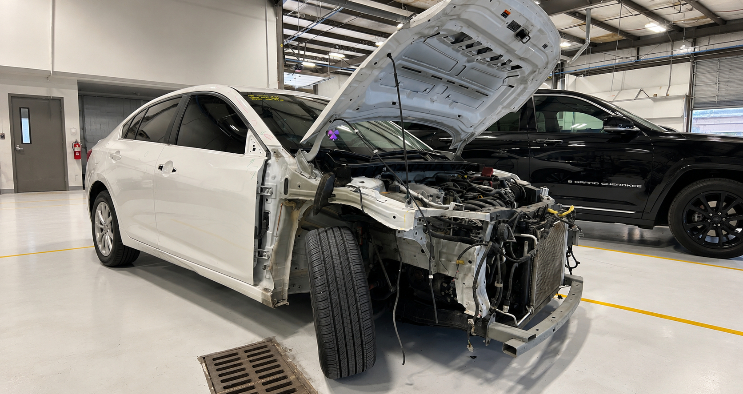
Structural damage refers to any harm done to the components that give your vehicle its shape, stability, and crash-worthiness. These are not cosmetic elements. They are the underlying framework, the parts engineered to maintain integrity under stress and manage crash forces in critical moments. When these components are damaged, the effects go beyond appearance. They influence how the vehicle drives, how it distributes impact energy, and how effectively it can protect occupants in a future collision.
The key structural areas technicians assess after any collision include:
Frame rails: The two main longitudinal beams running the length of the vehicle. Even slight bending affects alignment, handling, and how the car responds in a future crash.
Unibody sections: In most modern vehicles, structural strength is integrated into the body itself. This includes the floor pan, door pillars (A, B, and C pillars), and roof rails. Damage in one area can propagate through the structure, extending far beyond the original point of impact.
Crumple zones: Located at the front and rear, these sections are specifically engineered to absorb and dissipate crash energy. Once compromised, their ability to perform this function is reduced unless they are properly repaired or replaced.
Subframe and suspension mounting points: These connect your wheels and suspension to the body. Any distortion here can directly impact steering precision, braking stability, and overall handling.
Firewall: Positioned between the engine bay and the passenger cabin, the firewall serves as a critical protective barrier. Intrusion in this area is a serious safety concern and often indicates more extensive structural damage.
Warning Signs of Hidden Structural Damage to Never Ignore
In many cases, signs of hidden structural damage do not appear immediately after an accident. They may develop over days or weeks of driving. Whether you walked away from a minor parking lot incident or a more significant highway collision, the following signs suggest your vehicle deserves a professional collision inspection.
Uneven Panel Gaps
Stand back and look at the gaps between your doors, hood, trunk lid, and fenders. These gaps should be consistent and even. After a collision, shifted body panels or a twisted frame will cause these gaps to become irregular. A wider gap on one side, or a door that now sits slightly higher or lower than before, is a common early indicator of frame damage.
Doors or Windows That Do Not Open and Close Properly
Your door frames are structural components. If a door feels stiff, requires extra force to close, or no longer latches at the same point, the frame around it may have shifted. This is a direct physical sign of structural damage that should not be dismissed as a minor inconvenience.
Vehicle Pulls to One Side
Persistent pulling, especially when combined with uneven tire wear, can point to a bent frame rail or a damaged suspension mounting point that routine alignment cannot correct. If pulling develops or worsens after a collision, it warrants a full structural evaluation, not just a standard alignment check.
Unusual Noises Over Bumps or During Turns
Creaking, clunking, or rattling sounds that were not present before the accident are often the result of structural components now flexing in ways they were never designed to. A creak from the door pillar when you go over a bump is not normal and should be evaluated as part of a collision inspection.
Visible Waviness in Body Panels
Kneel beside your car and look down the length of each panel at a low angle. Ripples, waves, or slight depressions that are not visible from above are signs of metal that has been stressed. Sometimes this is purely cosmetic. Other times, it reflects underlying structural deformation that requires professional attention.
Warning Lights That Appear After a Collision
Modern vehicles are packed with sensors. If new warning lights appear after a collision, particularly those related to stability control, ABS, or the airbag system, treat them seriously. These systems rely on the vehicle’s structural geometry to function correctly. A displaced sensor or damaged mounting point can cause a critical vehicle safety system to fail silently.
What a Proper Collision Inspection Actually Involves
A proper collision inspection is not just about identifying visible damage. It is about verifying that the vehicle still meets the structural and safety standards for which it was originally engineered. That requires precision, data, and a systematic approach.
1. Computerized Measuring Systems
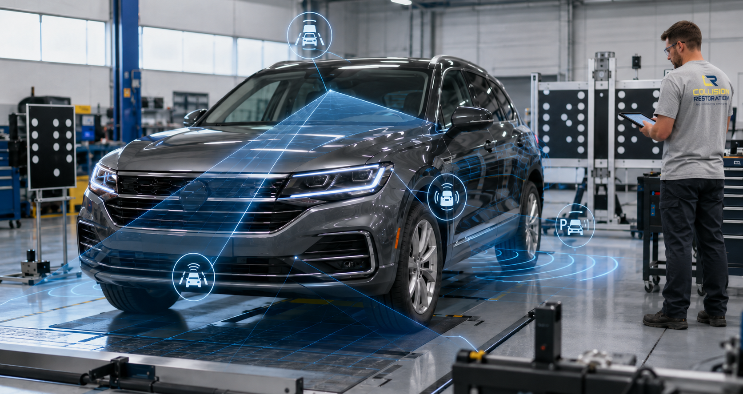
Technicians use computerized systems to compare the vehicle’s current dimensions against factory specifications with millimeter-level accuracy. This quickly reveals any hidden shifts in frame rails, mounting points, or suspension geometry that would otherwise go undetected.
2. Three-Dimensional Frame Analysis
For more complex impacts, a full 3D analysis evaluates how the entire structure aligns. Even if individual points appear correct, the vehicle can still be twisted or misaligned when viewed as a complete structure. This step is critical for identifying hidden structural damage in unibody vehicles.
3. Suspension and Steering Evaluation
Key components such as control arms, tie rods, and strut mounts are inspected for stress or deformation. Since these parts operate within tight tolerances, even minor damage can affect handling and braking stability.
4. Diagnostic Scanning
A full electronic diagnostic scan reads every module in the vehicle. According to collision repair trend data from Claims Journal, the average number of replacement parts listed on damage appraisals jumped 15 percent between 2019 and 2024, reflecting the interconnected components that can be affected by a single collision. Diagnostic scanning captures crash event data stored in the airbag control module, fault codes in the stability control system, and sensor errors that may indicate structural displacement.
5. Paint and Surface Analysis
An experienced auto body repair technician will also evaluate surface paint for stress cracking, chipping along panel edges, or micro-fractures that indicate metal distortion beneath. These surface-level signals are often the first visible evidence of structural damage that has not yet fully manifested in handling or noise.
Why Delaying Collision Repairs Costs You More
Low-speed collisions are often underestimated, yet they carry real structural and financial risks. According to NHTSA crash statistics, rear-end collisions account for approximately 28.4 percent of all crashes, making them the most common type and among the most likely to cause hidden structural damage. Even a 10 mph impact can compromise crumple zones, misalign suspension components, or shift the subframe without obvious signs.
Left unaddressed, structural damage does not remain isolated. It accelerates the wear of the tire, brake, and steering components. It weakens the vehicle’s crash energy management in future accidents. And from a financial standpoint, delaying collision repair typically increases total repair costs. It can negatively impact resale value, as frame damage is recorded in vehicle history reports and flagged by buyers and dealers alike.
The bottom line: what costs a moderate amount to fix today may cost significantly more and carry greater risk if left unaddressed.
How to Choose the Right Collision Repair Shop in Indiana
Not all collision repair shops are equipped to identify and properly address hidden structural damage. When evaluating your options, several factors matter beyond price and proximity.
OEM certification: An OEM-certified collision repair shop has been trained and tested by vehicle manufacturers on the specific repair procedures for your make and model. This is the single most meaningful quality indicator in auto body repair.
Computerized frame and measuring equipment: A shop that cannot perform three-dimensional structural analysis cannot fully assess frame damage or unibody damage. Ask directly whether they have this capability.
Transparency about the inspection process: A qualified collision inspection shop will walk you through what they found, how they measured it, and what the repair plan involves, before any work begins.
Documented repair warranty: Reputable collision repair shops stand behind their work with a written warranty on both parts and labor. This is especially important for structural repairs, where long-term integrity is at stake.
Customer reviews and community presence: A family-owned, community-rooted shop is often more accountable to its local customers than a large national chain. Look for consistent reviews that specifically mention quality, communication, and repair outcomes.
Collision Restoration serves drivers across five Indiana locations in Zionsville, Noblesville, Pendleton, Greenfield, and Westfield. We hold active OEM certifications from manufacturers including Ford, Honda, General Motors, and Subaru, and our technicians are trained to identify and address structural damage that other shops may overlook.
Frequently Asked Questions About Structural Damage After a Collision
Can a vehicle have structural damage with no visible dents?
Yes. This is one of the most common misconceptions about collision damage. Modern vehicle construction distributes impact energy through the unibody structure, meaning frame damage and structural deformation can occur at points far from the area of contact, with no visible exterior evidence.
How long after a collision can structural damage symptoms appear?
Signs of hidden structural damage can take days or weeks to become noticeable. Panel gaps may shift gradually as the metal settles. Pulling or handling issues may only become apparent at highway speeds. This is why a collision inspection immediately after an accident is always advisable, even when the damage looks minimal.
Does insurance always cover structural damage?
In most cases, yes, provided you have comprehensive or collision coverage and the damage is properly documented. An OEM-certified collision repair shop will help ensure that all structural damage is captured in the initial assessment, so nothing is omitted from the claim.
What is the difference between cosmetic and structural damage?
Cosmetic damage affects the vehicle’s appearance but not its safety performance: surface scratches, minor dents in non-structural panels, and paint damage. Structural damage affects the components that manage crash energy and protect occupants, including frame rails, crumple zones, door pillars, and suspension mounting points. Both deserve attention, but structural damage carries direct safety implications.
Do I need an OEM-certified shop for structural repairs?
For vehicles that are still within manufacturer specifications, an OEM-certified collision repair shop is the most reliable way to ensure that repairs are performed correctly. OEM certification means the manufacturer has trained the technicians on the approved repair procedures, tools, and materials for your specific vehicle.
Conclusion
Most drivers judge a collision by how it looks or feels at the moment. That is understandable, but the systems that protect you in the next accident operate beneath the surface and rarely signal when something is wrong. The only way to truly know your vehicle’s condition after an accident is through a thorough, professional collision inspection. If your car has been in any type of accident, having a certified technician evaluate it is not an overreaction. It is the responsible next step. Not because something is necessarily wrong, but because structural integrity is not something you want to leave to assumption. At Collision Restoration, we specialize in identifying hidden structural damage that others miss. We offer a free photo estimate with no obligation so you can make informed decisions with confidence. Start online at autocollisionrestoration.com, or visit any of our Indiana locations for a straightforward, professional collision repair assessment.
Categories
- Accident Recovery (3)
- Auto Maintenance and Car Care (1)
- Auto Parts Guide (1)
- Auto Repair Tips (1)
- Car Care & Maintenance (1)
- Collision Repair Standards (2)
- Consumer Rights (2)
- Industry News & Trends (1)
- Paintless Dent Repair (1)
- Vehicle Safety & Structural Integrity (2)
- Vehicle Technology and Repair (2)
- Warranty & Peace of Mind (1)