


What Is a Collision Repair Supplement and Does It Cost Me More?
Accident Recovery
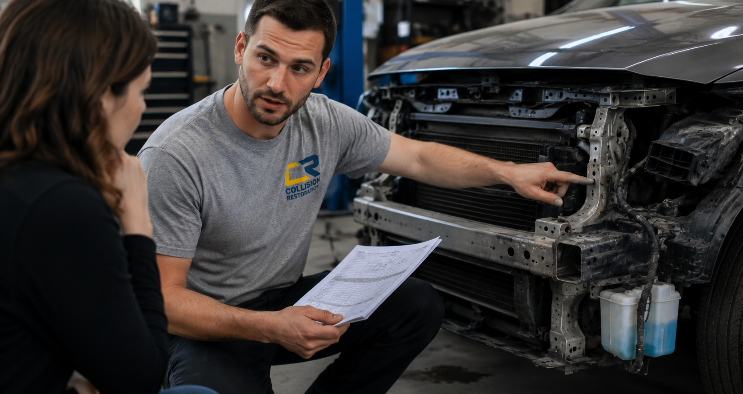
A collision repair estimate is not always the final picture of what a damaged vehicle needs. In many cases, the repair process itself reveals information that could not be confirmed during the initial inspection. A bumper may conceal damage behind it. A component that appeared repairable may require replacement once it is removed. A diagnostic procedure may become necessary after technicians determine which vehicle systems were affected. When that happens, the original estimate has to be updated. That update is commonly called a collision repair supplement. For vehicle owners, the confusing part is usually not what a supplement is. It is what it means for the repair and, more importantly, whether it means they are going to owe more money. The answer is not necessarily. A supplement can increase the total repair cost without increasing the customer’s out-of-pocket responsibility, depending on insurance coverage, the deductible, and the additional work involved.
What Is a Collision Repair Supplement?
A collision repair supplement updates the original repair estimate to account for additional damage, parts, labor, or repair procedures identified after the initial estimate was prepared. It can add, remove, or change items on the original damage report as more information becomes available. The important point is that a supplement is not necessarily a second estimate for a separate repair. It is generally an adjustment to the existing repair plan. I-CAR explains that supplements can include additions or changes made after a damage report has been finalized, including hidden damage discovered during the repair process. Think of the original estimate as a plan based on what could reasonably be established at the time of inspection. The supplement updates that plan when the vehicle provides new information. So when a shop says, “We sent a supplement to your insurance company,” it should not automatically be interpreted as, “You have another bill.”
Why Does a Collision Repair Supplement Happen?
The most common reason is additional damage that could not be confirmed during the initial inspection. Collision damage does not always stop where the visible dent or broken panel ends. A damaged bumper can conceal bent reinforcement or mounting points, while a crushed exterior panel may hide problems with wiring or components underneath it. Some damage may also require measurements, diagnostic testing, or further inspection before it can be confirmed. This is where the repair process differs from simply looking at the vehicle from the outside. I-CAR’s guidance on repair blueprinting explains how an orderly teardown can help identify hidden damage and establish a more complete repair picture before work progresses. A supplement is often where the difference between estimating a vehicle and fully understanding its damage becomes visible. Once technicians can access previously hidden areas, the repair plan can become more precise. A part initially expected to be repairable may prove to require replacement, or a vehicle-specific repair or diagnostic procedure may become necessary once the damage is fully assessed. The supplement reflects a change in the repair information. It does not automatically mean the original estimate was careless or incorrect.
Why Can’t Everything Be Included in the First Estimate?
An initial inspection is performed with limited access to the vehicle. An estimator can document visible damage and identify signs of additional problems, but some components cannot be fully evaluated until surrounding parts are removed. Trying to price every possible hidden problem before it has been confirmed would not necessarily make an estimate more accurate. It could mean including repairs the vehicle ultimately does not need. A more reliable approach is to establish the damage that can be confirmed, inspect the vehicle further as necessary, and update the repair plan when additional damage is actually found. A supplement can therefore result from a more complete inspection, not simply a more expensive repair decision.
Does a Supplement Mean the Shop Missed Something?
Not necessarily.
There is an important distinction between overlooking visible damage and discovering damage that was not accessible during the initial inspection. If a clearly visible damaged component was missed, that is an estimating issue. Finding damage behind that component after it has been removed is different.
Supplements are a normal way to document changes to a repair plan when the full extent of damage cannot initially be established. A professional facility should still be able to explain what was discovered, where it was found, and why it changes the repair.
The quality of the process matters more than whether a supplement exists. The customer should understand what changed and why.
Does a Supplement Mean My Repair Will Cost More?
The total repair cost may increase. That does not automatically mean your personal cost will increase.
Suppose the original repair estimate is $5,000 and the shop discovers another $1,500 in accident-related damage. The revised repair total may become $6,500. If the additional work is covered under the existing claim, the insurer may pay the covered amount under the policy terms.
Your deductible is a separate consideration. The Insurance Information Institute explains that collision coverage generally pays for covered vehicle damage after the applicable deductible is accounted for. So a larger repair estimate does not automatically translate into another $1,500 bill for you. Your actual financial responsibility depends on your policy, deductible, coverage determination, and whether any work falls outside the covered claim.
A supplement can increase the repair cost without necessarily increasing the customer’s out-of-pocket cost.
What Happens After a Shop Finds Additional Damage?
Once the repair facility identifies additional damage, it documents it and updates the estimate. Depending on the repair, that documentation may include photographs, measurements, diagnostic information, part information, or other evidence supporting the additional operation.
The technician then submits the revised estimate to the insurance company for review. The insurer may approve the additional work, request more information, send an adjuster to reinspect the vehicle, or question specific items. The process can vary by insurer and claim.
For the vehicle owner, the supplement is largely a documentation and communication process between the repair facility and insurer. You should not have to determine the technical reason for every added line item yourself, but the shop should be able to explain what was discovered and how it affects the repair.
Can a Supplement Delay My Car Repair?
It can, particularly when newly identified damage requires additional parts, insurance authorization, or outside services. For example, if a damaged component is discovered after disassembly, the shop may need to order a replacement before continuing. If the additional repair significantly changes the scope, the insurer may also need time to review the documentation or reinspect the vehicle.
That can be frustrating, but proceeding without addressing newly discovered damage creates a bigger problem. A vehicle should not be repaired according to an incomplete damage picture simply to avoid an additional review.
What If the Insurance Company Does Not Approve the Supplement?
A supplement is a request to revise the repair estimate. It does not guarantee approval of every additional operation.
If an insurer questions an item, the repair facility may need to provide additional documentation or explain why the operation is necessary. The insurer’s decision can depend on the policy, the circumstances of the accident, and whether the requested repair relates to covered damage.
This is where documentation becomes particularly important. Clear photographs, measurements, diagnostic results, and vehicle-specific repair information can help establish why an additional operation belongs in the repair plan.
If there is a disagreement about coverage or what you may owe, ask the repair facility and insurer to identify which item is being disputed and why. That is much more useful than being told, “the insurance company won’t pay for it.”
Will I Have to Pay the Supplement?
Not necessarily.
If the additional work relates to the covered collision and is approved under the claim, the insurer may cover the additional amount under the policy. Your deductible generally does not increase simply because the repair estimate was supplemented. However, some costs may remain your responsibility. These may include your deductible, repairs unrelated to the accident, items excluded by the policy, or work you specifically authorize outside the covered repair. Before agreeing to customer-paid work, ask the repair facility to explain exactly what the charge covers and whether it is part of the insurance claim. If coverage is unclear, your insurer can explain how your policy applies.
What Should I Ask When the Shop Says It Sent a Supplement?
You do not need to understand estimating software or insurance terminology. You just need to understand what changed.
Ask:
- What additional damage was found?
- Where was it discovered?
- Was the vehicle disassembled to identify it?
- What repair or replacement was added?
- Has the supplement been submitted to my insurance company?
- Could this change what I owe or how long the repair will take?
A good repair facility should be able to answer those questions clearly. The goal isn’t simply to tell you the estimate increased. It is to explain why the repair scope changed and what happens next.
How Collision Restoration Approaches Supplements
At Collision Restoration, we treat a supplement as part of the repair process, not an unexplained increase in the customer’s bill.
When additional collision-related damage is identified, we update the repair plan to reflect what technicians have actually found. The additional damage is documented and communicated through the appropriate process so the insurance company can review the revised scope. That approach matters because a supplement isn’t simply meant to increase the estimate. It is to make the repair plan more accurately reflect the vehicle’s actual condition.
Collision Restoration’s approach centers on a complete assessment of the damage, appropriate repair procedures, and clear communication throughout the repair. For customers, that means understanding not only what is being repaired, but why the repair plan may change along the way.
Frequently Asked Questions
What is a supplement in collision repair?
A collision repair supplement is an update to the original estimate that accounts for additional damage, parts, labor, or repair procedures identified after the initial estimate was prepared.
Why did my collision repair estimate increase?
An estimate can increase when additional damage is discovered during disassembly, when a part requires replacement rather than repair, or when a vehicle-specific repair or diagnostic procedure becomes necessary.
Do I have to pay for a collision repair supplement?
Not necessarily. If the additional work relates to a covered collision and is approved under the claim, the insurer may cover the additional amount under the policy. Your deductible and any non-covered work may still be your responsibility.
Can a supplement delay my vehicle repair?
Yes. Additional damage may require insurance review, parts ordering, documentation, or other work before repairs can continue.
Is a supplement a new insurance claim?
Generally, no. A supplement typically updates the repair estimate associated with the existing collision claim rather than creating a separate claim.
Conclusion
A collision repair supplement updates the original repair estimate when new information changes the repair scope. It commonly occurs when additional damage, parts, or repair procedures are identified after the initial inspection. The total repair cost may increase, but that does not automatically mean you will pay more. Your financial responsibility depends on your insurance coverage, deductible, and whether additional work falls outside the covered claim. When a shop says, “We sent a supplement to your insurance company,” it generally means the repair plan has changed, and the additional work needs to be documented and reviewed. If your vehicle is undergoing collision repairs and you want a clearer explanation of what was found and why the repair plan changed, Collision Restoration can help you understand the next step.
Categories
- Accident Recovery (3)
- Auto Maintenance and Car Care (1)
- Auto Parts Guide (1)
- Auto Repair Tips (1)
- Car Care & Maintenance (1)
- Collision Repair Standards (2)
- Consumer Rights (2)
- Industry News & Trends (1)
- Paintless Dent Repair (1)
- Vehicle Safety & Structural Integrity (2)
- Vehicle Technology and Repair (2)
- Warranty & Peace of Mind (1)