

Why Some Collision-Damaged Parts Must Be Replaced Instead of Repaired
Auto Parts Guide
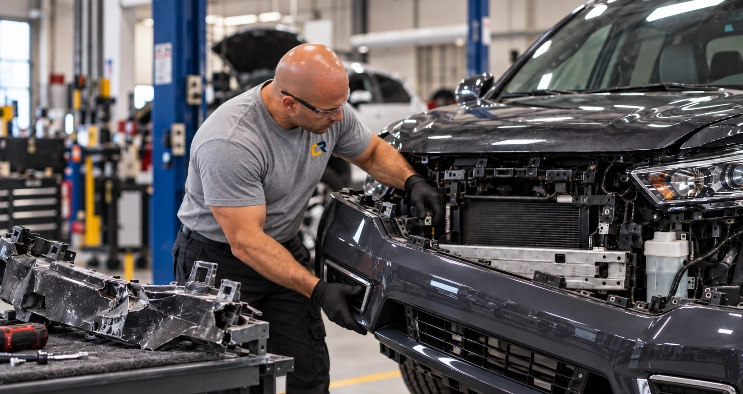
A damaged vehicle does not always tell the full story from the outside. A dented panel may be repairable, while a seemingly minor component may need replacing. That difference isn’t necessarily about how severe the damage looks. It can come down to the material, the component’s role, how the collision affected it, and what the vehicle manufacturer allows during repair. Modern vehicles combine high-strength steel, aluminum, engineered crash structures, electronic sensors, and specialized fasteners. Each serves a different purpose, and each can have different repair limitations. An expert collision technician must look beyond the damaged surface and understand what each part is designed to do. The repair-or-replace decision is ultimately about restoring the vehicle correctly, not simply making a damaged component look straight again.
High-Strength Steel Is Not Repaired Like Conventional Steel
Steel is no longer a single material category in vehicle construction. Manufacturers use different steel grades in different areas of a vehicle to achieve specific levels of strength, stiffness, and weight reduction. High-strength and ultra-high-strength steels can provide important structural benefits, but those properties also affect how the material responds to collision repair.
Calling a component “high-strength steel” does not, by itself, determine whether it needs replacement. The material’s actual strength, where it is used, the extent of the damage, and the approved repair method all matter. I-CAR explains how material tensile strength affects repairability, including the limitations that can apply to straightening and heat.
That is why a technician cannot simply treat every steel component the same way. A panel that can be safely reshaped may sit alongside a structural component for which straightening is restricted. The repair method has to match the material and the vehicle’s construction.
Aluminum Changes the Repair Process
Aluminum brings a different set of considerations to collision repair. It reacts differently than steel during forming and repair, and working with it can require dedicated equipment, tools, joining methods, and corrosion-control measures.
That does not mean aluminum must be replaced. Some aluminum panels can be repaired when the manufacturer provides a suitable procedure, and the collision repair facility has the appropriate equipment and training. Structural aluminum components can be more restrictive, particularly where the original strength, shape, or attachment method is important to the vehicle’s construction.
The distinction matters because physical reshaping is only one part of a repair. A component may be moved back into position but still be unsuitable for return to service. The question is whether the particular part can be restored using a method that meets the vehicle’s requirements.
Some Parts Are Designed to Deform in a Crash
Some collision-damaged components need replacement for a different reason: deformation is part of their job.
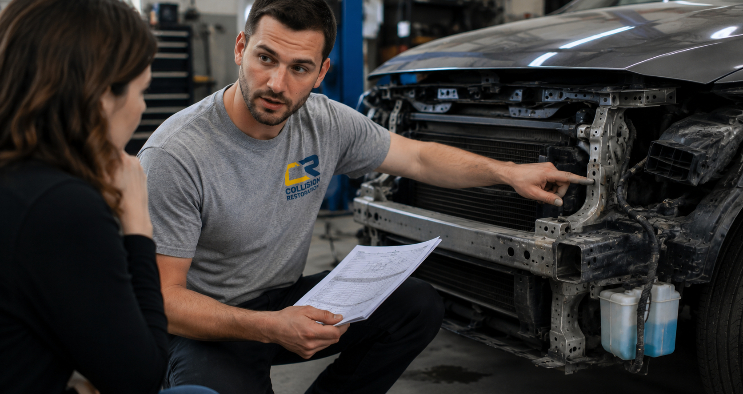
Crush boxes are designed to deform during an impact and help manage collision energy before it reaches other areas of the vehicle. Once a crush box has been damaged, straightening it does not necessarily restore the characteristics it was engineered to provide. It is not simply a piece of metal that needs to be returned to its original shape.
The same principle applies to certain bumper reinforcements and other energy-management components. These parts can play an important role in how impact forces are distributed through the vehicle. I-CAR’s guidance specifically identifies damaged crush boxes for replacement and explains the repair restrictions that can apply to bumper reinforcements. For an owner, this can be one of the least intuitive replacement decisions because the part may not look dramatically damaged. Its purpose during a collision is what makes the difference.
A Sensor Bracket Can Be a Critical Component
Some of the parts most likely to be overlooked are also connected to the vehicle’s electronic safety systems.
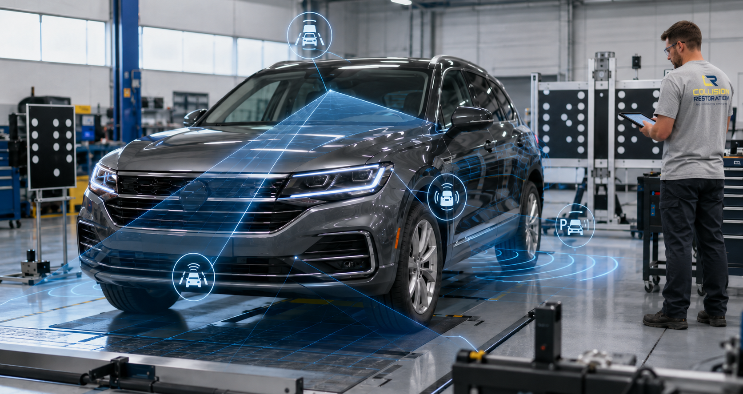
Modern vehicles can use cameras and radar sensors that depend on precise mounting locations. A bracket may be small and inexpensive compared with a bumper or structural component, but its position can determine where the sensor sits relative to the vehicle. If that position changes, the sensor may no longer operate within the conditions for which it was designed.
That does not mean every bent sensor bracket has to be replaced. The repair decision depends on the vehicle and the component. In some cases, the manufacturer may provide an approved repair method. In others, replacement may be required, followed by additional inspection, scanning, or calibration.
The important detail is dimensional accuracy. A bracket doesn’t have to look severely damaged to warrant attention if it’s meant to hold a sensor or camera in a specific position.
Some Parts Cannot Be Reused Even When They Look Fine.
Not every part replacement after a collision results from visible damage.
Vehicles contain one-time-use parts and fasteners that are designed to be replaced after removal or use. These can include certain bolts, rivets, clips, and other fastening components. Some are designed to stretch during installation, while others rely on coatings or locking characteristics that make reuse inappropriate.
That can confuse owners because a removed fastener may look completely normal. There may be no crack, bend, or other obvious sign of damage. Yet the manufacturer’s procedure can still require a new part. I-CAR’s guidance on one-time-use parts and fasteners explains why components can look uncompromised and still be unsuitable for reuse.
In other words, replacement does not always mean the collision destroyed the part. Sometimes the repair procedure itself requires a new component.
OEM Procedures Can Determine the Repair
This is where vehicle-specific information matters most. No universal repair rule applies to every damaged part, even when two components look similar.
Manufacturers can specify whether a component may be repaired, straightened, sectioned, or replaced. They can also define approved attachment methods and identify parts or fasteners that should not be reused. Those instructions can vary by model, model year, and component location.
The manufacturer’s repair information is what turns a general repair possibility into a vehicle-specific decision. A technician may have the equipment and skill to reshape a damaged component, but that does not mean the manufacturer permits that repair method.
For structural components in particular, following the specified procedure matters because the repair must restore the vehicle to its design, not simply return the damaged area to its previous shape.
What Determines Whether a Part Should Be Repaired or Replaced?
By this point, the pattern is clear: no single factor determines the answer.
A repair-versus-replace decision can involve several considerations at once. The material may limit how you can work the part. The component may be designed to absorb crash energy. Its position may affect a camera or sensor. Its fasteners may be intended for one-time use. The manufacturer may also restrict repair or sectioning.
That is why a certified collision technician has to evaluate the part in context. The easiest repair is not necessarily the right repair, and replacement is not automatically the best option either. The right method restores the component within the vehicle’s engineering and repair requirements.
What Vehicle Owners Should Ask When a Part Needs Replacement
When a collision repair center recommends replacement for a part that appears repairable, asking why can provide useful context.
A vehicle owner can ask what the part is made from, what function it serves, whether it is part of the vehicle’s crash-energy management system, and whether the manufacturer provides a repair procedure. It is also reasonable to ask whether the component is considered one-time use and whether the collision may have affected a sensor, camera, or mounting point.
These questions are not meant to challenge the repair plan. They help explain the reasoning behind it. A good repair discussion should make it clear whether visible collision damage, material limitations, component function, or a manufacturer-specific requirement drives replacement.
At Collision Restoration, repair decisions begin with understanding how the damaged component fits into the vehicle as a whole. We don’t treat every dent, bent bracket, or damaged structural part the same way.
The evaluation considers the condition of the damaged area, the materials involved, the function of the affected component, and the requirements for repairing that vehicle. That matters especially with newer vehicles, where structural materials and vehicle technology can make a seemingly simple repair more involved.
For the customer, the result should be a repair plan with a clear reason behind each major repair or replacement decision. Sometimes the correct answer is repair. Sometimes it is replacement. The goal is to determine which method is appropriate for that particular vehicle and the damage it sustained.
Frequently Asked Questions
Why do some high-strength steel parts have to be replaced after a collision?
High-strength steel varies in strength and repairability. Some components can be repaired under specific conditions, while others restrict straightening, heating, or sectioning. The applicable vehicle repair procedure determines what is appropriate for that component.
Can aluminum parts be repaired after a collision?
Yes, some can. Repairability depends on the specific part, the type of damage, the repair facility’s capabilities, and the manufacturer’s approved procedures. Some structural aluminum components have more limited repair options and may require replacement.
Why can’t a damaged crush box simply be straightened?
A crush box is designed to deform and help manage collision energy. Once damaged, straightening it may not restore the characteristics it was engineered to provide during another impact, so replacement is generally required.
What are one-time-use parts?
They are components or fasteners designed to be replaced after removal or use. Certain bolts, clips, rivets, and similar parts may look undamaged but still require replacement because they are not intended for reuse.
Can a bent sensor bracket be repaired?
It depends on the vehicle and the specific bracket. Because sensor and camera systems rely on precise positioning, the manufacturer may require repair, replacement, or additional calibration depending on the damage and component involved.
Who determines whether a collision-damaged part should be repaired or replaced?
The decision should consider the vehicle’s damage, the component’s material and function, and the manufacturer’s repair information. A qualified collision repair technician uses those factors to determine the appropriate repair method.
Conclusion
A collision-damaged part is not automatically repairable just because it can be reshaped. High-strength steel and aluminum can have material-specific repair limitations. Crush boxes are designed to deform during an impact. Sensor brackets can require precise positioning, and some fasteners must be replaced even when they show no visible damage. The right repair-or-replace decision comes from understanding what the component is made to do, how the collision affected it, and what the vehicle manufacturer requires. That is what lets collision repair go beyond restoring appearance and focus on properly restoring the vehicle itself.
Categories
- Accident Recovery (3)
- Auto Maintenance and Car Care (1)
- Auto Parts Guide (2)
- Auto Repair Tips (1)
- Car Care & Maintenance (1)
- Collision Repair Standards (2)
- Consumer Rights (2)
- Industry News & Trends (1)
- Paintless Dent Repair (1)
- Vehicle Safety & Structural Integrity (2)
- Vehicle Technology and Repair (2)
- Warranty & Peace of Mind (1)