

ADAS Features Explained: How Your Vehicle’s Safety Systems Work and Why Calibration Matters
Vehicle Technology and Repair
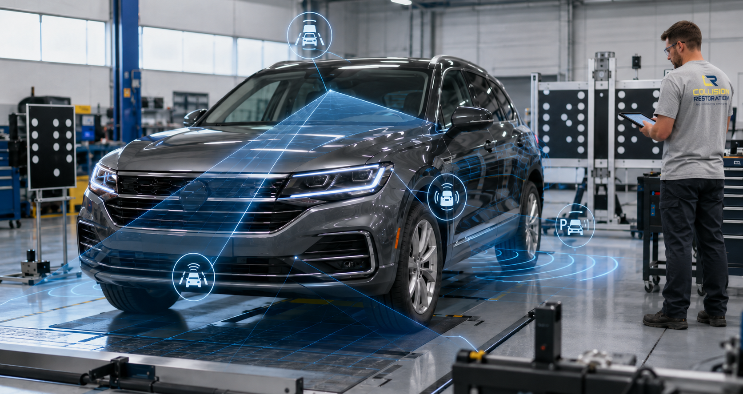
Many newer vehicle models are equipped with Advanced Driver Assistance Systems (ADAS), a collection of technologies designed to help drivers recognize hazards and reduce the risk of certain types of collisions. Features like automatic emergency braking, adaptive cruise control, lane-keeping assist, and blind-spot monitoring rely on cameras, radar sensors, and onboard computers working together behind the scenes. What makes these systems especially important after a collision is their location. Cameras may be mounted behind the windshield, radar sensors are often hidden inside the front or rear bumper, and other components are integrated into parts that are commonly repaired or replaced after an accident. As a result, restoring a modern vehicle often involves more than repairing visible damage. It may also require evaluating the safety systems that support the driver every time the vehicle is on the road. If you’ve recently been in an accident, understanding how ADAS works and why calibration may be necessary can help you better understand today’s collision repair process and the questions worth asking before your vehicle is returned to you.
What Are ADAS Features?
Advanced Driver Assistance Systems, commonly referred to as ADAS, use cameras, radar sensors, ultrasonic sensors, and electronic control modules to monitor the area around a vehicle. Rather than replacing the driver, these technologies provide alerts or limited assistance when they detect situations that may increase the risk of a collision.
Many drivers already use ADAS every day without thinking about it. Automatic emergency braking can apply the brakes if a crash appears imminent. Adaptive cruise control automatically adjusts the following distance in traffic, while lane-keeping assist helps guide the vehicle back toward the center of its lane when unintentional drifting is detected.
According to the National Highway Traffic Safety Administration (NHTSA), these technologies are becoming increasingly common on newer vehicles and are intended to assist attentive drivers, not replace them.
Although each feature performs a different function, they all rely on accurate information. Cameras, radar sensors, and other components must work together precisely for the system to recognize road conditions and respond as designed.
Why Modern Collision Repairs Have Become More Technical
As modern vehicles have become increasingly dependent on cameras, sensors, and onboard electronics, collision repairs have evolved as well. Restoring a damaged bumper or replacing a windshield may now involve components that directly support the vehicle’s driver assistance systems.
For example, a windshield replacement can affect the position of a forward-facing camera, while repairing a front bumper may involve removing or reinstalling a radar sensor hidden behind the bumper cover. Suspension or steering repairs can also influence how certain ADAS features interpret the vehicle’s position on the road.
Because these systems work together, even routine repairs can affect how driver assistance technologies perform. That’s why today’s repair process extends beyond restoring visible damage. It also involves determining whether the affected systems require inspection, testing, or recalibration before the vehicle is returned to service.
Rather than relying on a universal process, repair professionals consult OEM (Original Equipment Manufacturer) repair information for the specific make and model they’re working on. Industry guidance from I-CAR Repairability Technical Support (RTS) reinforces this approach, emphasizing that calibration requirements vary by manufacturer and by the repairs performed. Following vehicle-specific repair procedures helps ensure that both the repair and the supporting safety technology are restored according to the manufacturer’s engineering standards.
Why Certain Repairs Can Affect ADAS
Not every collision directly damages an ADAS component, but many repairs involve the parts these systems depend on. Because cameras and sensors are designed to operate from precise reference points, changes made during the repair process can affect how they interpret the road and surrounding traffic.
Whether the repair involves replacing a windshield, repairing a bumper, or correcting wheel alignment, the goal isn’t simply to restore the damaged part. It’s to ensure that the supporting safety systems can continue to perform as intended.
Windshield Replacement Can Affect Forward-Facing Cameras
On many late-model vehicles, the forward-facing camera is mounted behind the windshield. This camera supports features such as lane departure warning, lane keeping assist, forward collision warning, and traffic sign recognition.
Replacing the windshield doesn’t necessarily damage the camera itself, but it can change its position in relation to the road. Because these systems rely on a precise viewing angle, the camera may need to be recalibrated after installation to verify it’s interpreting lane markings and surrounding traffic correctly.
While the new windshield restores visibility, calibration helps confirm that the technology behind it is functioning as intended.
Bumper Repairs May Involve Hidden Safety Technology
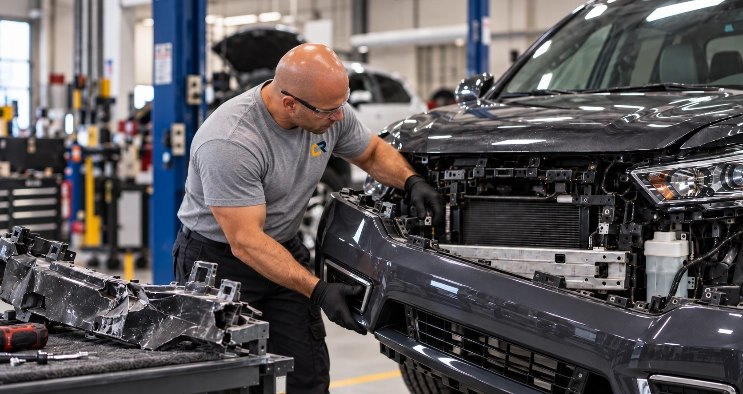
Modern bumpers are designed to do much more than protect the vehicle during low-speed impacts. Many also house radar sensors used by systems such as adaptive cruise control, automatic emergency braking, and forward collision warning.
Although these sensors are hidden behind the bumper cover, their position is carefully engineered. If the mounting location changes during repairs or replacement, the sensor may no longer measure distance or vehicle speed as accurately as designed.
That’s why repairs involving these components often include additional inspection or calibration before the vehicle is returned to the owner.
Suspension and Alignment Can Influence Driver Assistance Systems
ADAS performance isn’t limited to cameras and radar sensors. Some systems also rely on proper steering geometry and wheel alignment to accurately interpret the vehicle’s direction of travel.
After a collision, auto body repairs involving suspension or steering components can alter those measurements. Even when the mechanical repairs are completed correctly, alignment must meet the manufacturer’s specifications before certain driver assistance systems can be accurately verified.
This illustrates an important difference between repairing a vehicle and restoring its safety technology. Replacing damaged parts is only one step. Confirming that the systems supporting those parts continue to operate correctly is another.
What ADAS Calibration Actually Does
One of the most common misconceptions about ADAS calibration is that it’s simply resetting a warning light or updating software. In reality, calibration verifies that cameras and sensors are correctly aligned so they can accurately interpret the vehicle’s surroundings.
If a forward-facing camera or radar sensor is slightly misaligned after a repair, it may still operate. Still, it may not detect lane markings, surrounding traffic, or potential hazards with the level of accuracy intended by the manufacturer. Calibration establishes the proper reference points so those systems can perform as designed.
Depending on the make and model, the process may involve static calibration, completed inside the repair facility using specialized targets and equipment; dynamic calibration, which requires driving the vehicle under specific conditions; or a combination of both.
Because manufacturers design these systems differently, there is no single calibration process that applies to every vehicle. The required procedures depend on the vehicle’s design and the repairs that were performed.
For collision repair professionals, ADAS calibration isn’t an optional add-on or a separate service. It’s one step in restoring a vehicle according to the repair procedures established by its manufacturer.
Why ADAS Repairs Aren’t One-Size-Fits-All
Two vehicles with similar collision damage may require very different repair procedures.
That’s because ADAS technology varies significantly between manufacturers and even between different models from the same brand. Camera locations, radar mounting positions, calibration targets, software requirements, and testing procedures all differ depending on how the system was engineered.
For repair professionals, that means every repair begins with understanding the specific requirements of the vehicle in front of them, rather than assuming the same process applies to every make and model.
For drivers, it means the repair process is based on restoring the vehicle according to its original design, helping ensure that the safety systems continue to support the driver as intended.
What Drivers Should Ask Before Picking Up Their Vehicle
After a collision repair, it’s natural to check that the paint matches, the body panels align properly, and the visible damage has been restored. If your vehicle is equipped with ADAS, however, there’s one more question worth asking:
Were the driver assistance systems evaluated as part of the repair?
The answer depends on the type of damage and the repairs performed. Some repairs have no impact on ADAS, while others may require inspections, diagnostic scans, or calibration to verify that the systems continue to operate correctly.
This matters because these technologies are designed to support drivers during critical moments. Research from the Insurance Institute for Highway Safety (IIHS) shows that front crash prevention systems, including automatic emergency braking, reduce certain types of rear-end crashes. Those benefits depend on the systems functioning as intended after repairs.
Asking about ADAS calibration isn’t a question of the repair’s quality. It’s about understanding whether the safety technology built into your vehicle received the attention it required before returning to the road.
Frequently Asked Questions
Does every collision require ADAS calibration?
No. Calibration depends on the vehicle, the components affected, and the repairs performed. Some repairs have no impact on ADAS, while others require calibration or additional verification to ensure the systems continue operating correctly.
Does windshield replacement always require ADAS calibration?
Not always. Many newer vehicles have a forward-facing camera mounted behind the windshield, and manufacturers often recommend calibration after replacement. The exact requirement depends on the make, model, and installed safety systems.
Can I drive my vehicle if ADAS calibration hasn’t been completed?
In many cases, the vehicle may drive normally. However, if calibration is required after a repair, certain driver assistance features may not perform as intended until the system has been properly verified.
How long does ADAS calibration take?
The time varies depending on the vehicle and the required calibration method. Some procedures can be completed relatively quickly, while others require additional setup or a controlled road test.
Conclusion
Not long ago, many collision repair shops were largely focused on restoring what drivers could see. If the damaged panels were replaced, the paint matched, and the vehicle drove properly, the repair was generally considered complete. Today’s vehicles have changed that expectation. Advanced Driver Assistance Systems have changed the way modern vehicles are repaired. Because cameras, radar sensors, and other safety technologies are integrated into components that are commonly repaired after a collision, restoring a vehicle now involves more than replacing damaged parts. When repairs affect these systems, proper inspection and calibration help verify that the technology supporting features such as automatic emergency braking, lane keeping assist, and adaptive cruise control continues to operate as intended. If your vehicle has been involved in a collision, ask whether ADAS components were inspected and calibrated when recommended by the manufacturer. At Collision Restoration, every repair follows factory repair procedures to help ensure your vehicle’s safety systems are evaluated alongside the visible damage.
Categories
- Accident Recovery (3)
- Auto Maintenance and Car Care (1)
- Auto Parts Guide (2)
- Auto Repair Tips (1)
- Car Care & Maintenance (1)
- Collision Repair Standards (2)
- Consumer Rights (2)
- Industry News & Trends (1)
- Paintless Dent Repair (1)
- Vehicle Safety & Structural Integrity (2)
- Vehicle Technology and Repair (2)
- Warranty & Peace of Mind (1)