Parts availability is one of the most common reasons a collision repair timeline can change after the repair plan is already in place. A car may be fully assessed and ready for the next stage of work, but the repair cannot move forward until the required replacement component is available. Delays can happen because of manufacturer backorders, limited inventory for newer models, updated part numbers, or differences between components that may look nearly identical but are not interchangeable. This edition of Collision Repair Explained explains why those delays happen, what the repair team does behind the scenes, and what customers should expect when a part is unavailable.
Why Collision Repair Parts Can Be Delayed
Once the vehicle is disassembled and the damage is documented, the repair team confirms which components need replacement. It verifies the correct parts using the VIN, model year, trim, production date, and installed equipment. Some parts are available locally. Others may come from a regional warehouse or manufacturer distribution center, and some components may have no inventory when the order is placed. CCC Intelligent Solutions has reported that replacement-part availability can be especially challenging for newly introduced vehicles, where repair inventory may still be limited. In those cases, the repair may be technically ready to continue while one required component is still unavailable.
What Does “Backordered” Mean?
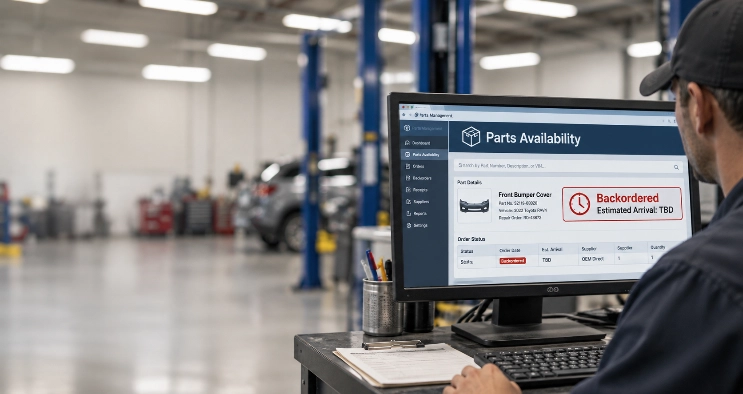
A backordered part has already been ordered, but the supplier or manufacturer does not currently have inventory available to ship. The order may remain active while the manufacturer produces additional stock or while the distribution network waits for another shipment. The difficult part is that a backorder does not always include a dependable arrival date. A supplier may provide an estimated release date, but that date can change. A professional collision repair update should therefore distinguish between an estimated availability date and a confirmed delivery date, rather than promising a completion date based on information the supplier has not verified.
Why New Autos Can Still Have Hard-to-Find Parts
A newer vehicle does not always mean better parts availability. When manufacturers launch a new model or redesign an existing body style, complete vehicles may reach dealerships before every collision-replacement component is widely stocked across the repair network. This can affect bumper covers, headlamps, grilles, radar brackets, electronic modules, structural components, and other model-specific parts. Two vehicles with similar-looking damage may therefore have very different repair timelines simply because one vehicle’s required component is available and the other’s is not.
What Is a Superseded Part?
Manufacturers sometimes replace an older part number with an updated one. This is known as a superseded part. The new component may install exactly like the original, or it may require revised brackets, fasteners, connectors, or related components. That means the parts team has to verify more than the latest number in the catalog. They also need to determine whether the update changes anything else in the repair. This prevents a situation where one replacement part arrives only for the technician to discover that another revised component is also required.
Why Similar-Looking Parts Are Not Always Interchangeable
Two bumpers, mirrors, grilles, or lamps can look nearly identical but be designed for different versions of the same vehicle. The difference may involve parking sensors, radar mounting points, camera compatibility, internal brackets, electrical connectors, trim packages, or production-date changes. For example, a grille may look identical from the outside but have a different internal design around a radar sensor. A bumper cover may have the correct shape but the wrong sensor mounting configuration. This is why parts are verified against the exact vehicle rather than selected based on appearance alone.
Why Can’t the Shop Just Order It Somewhere Else?
Sometimes another supplier can provide the part sooner, and checking alternative legitimate sources is part of managing a delay. Collision Restoration may verify availability through dealerships, suppliers, distribution channels, and other appropriate sources rather than relying on a single listing. However, you still need to check another listing for the correct part number, VIN compatibility, trim, equipment, production date, condition, and actual inventory. CCC’s collision parts systems help repairers compare availability and estimated arrival information across suppliers. Still, an item appearing in inventory does not automatically mean it is correct or immediately available for that specific vehicle.
Why One Missing Part Can Affect the Repair Timeline
Collision repair follows a sequence. A missing part can prevent technicians from completing panel fitment, structural assembly, reassembly, diagnostic testing, wheel alignment, sensor installation, or ADAS calibration. Whenever possible, other work can continue while the shop waits. But some operations depend on installing the missing component first. A radar bracket, for example, may need to be in place before the sensor can be mounted and calibrated. Moving ahead out of sequence can create additional work or prevent later steps from being completed accurately.
What Collision Restoration Does Behind the Scenes
When a part is delayed, the process does not stop with the original order. The Collision Restoration team may verify the part against the VIN and vehicle configuration, research manufacturer supersessions, check whether related updated components are required, contact alternate legitimate suppliers, monitor backorders, and adjust the collision repair sequence so other work can continue where possible. The objective is to keep the repair moving without compromising fit, function, or manufacturer requirements. If another valid source becomes available, that may shorten the delay. If the correct part remains unavailable, waiting may still be appropriate.
What Customers Should Expect During a Parts Delay
A useful repair update should explain which component is delayed, whether it has already been ordered, whether the part is backordered, whether an estimated or confirmed arrival date exists, and whether the delay changes the expected completion date. Not every update will include a new ETA. Sometimes the most accurate information is that the order remains active and the manufacturer or supplier has not confirmed availability. Clear communication is more useful than repeatedly changing a promised completion date.
Frequently Asked Questions About Repair Parts Delays
What does backordered mean in collision repair?
A backordered part has been ordered but isn’t available to ship yet. The order usually remains active until the supplier or manufacturer receives additional inventory.
Why can parts be difficult to find for a new vehicle?
New and recently redesigned vehicles can reach the road before replacement parts are widely stocked throughout the repair network. Availability often improves as production and distribution increase.
What is a superseded auto part?
A superseded part is an older component or part number that the manufacturer has replaced with an updated version. The replacement may sometimes require revised hardware, brackets, connectors, or related components.
Can repairs continue while the shop waits for a part?
Often, yes. Work that does not depend on the missing component may continue, but some repairs must follow a specific sequence before reassembly, alignment, calibration, or final verification can be completed.
Can another supplier get the part faster?
Sometimes. The shop can check other legitimate sources, but any alternative still has to be verified for the exact vehicle, equipment, production configuration, and collision repair requirements.
Conclusion
A parts delay does not necessarily mean the repair has stopped. The repair team may be checking alternate sources, verifying updated part numbers, monitoring a backorder, or completing other work that can move forward while the missing component is unavailable. If a part is delaying your repair, the most useful questions are which component is holding up the process, whether the team has checked other sources, and whether the arrival date is estimated or confirmed. This guide series makes these behind-the-scenes parts of the repair process easier to understand. Collision Restoration serves drivers in Zionsville, Noblesville, and Westfield. For a collision repair estimate or more information, visit autocollisionrestoration.com.