
Does Vehicle Insurance Cover Hitting a Deer in Indiana?
Insurance and Claims
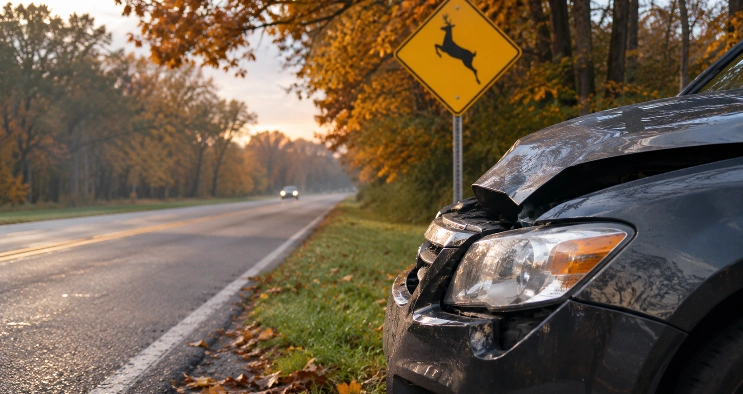
Deer collisions are a significant risk on Indiana roads, especially during the fall when deer movement increases. If you hit one, the immediate concerns are usually whether the vehicle is safe to drive and whether your insurance will cover the damage. For most drivers with the right coverage, comprehensive auto insurance typically covers deer collisions, subject to your policy terms and the comprehensive deductible. Deer accident insurance coverage in Indiana can work differently, however, if you swerve to avoid the animal and collide with a guardrail, tree, ditch, or another car instead. Understanding what coverage may apply, how deductibles work, and what to do after the impact can make the insurance and auto repair process easier to navigate.
What Does Insurance Typically Cover After Hitting a Deer?
A direct collision with a deer is generally treated as a comprehensive claim. The Indiana Department of Insurance explains that collision coverage applies to damage caused by a collision or upset, while comprehensive coverage applies to certain losses outside those circumstances. Animal strikes are typically handled under comprehensive coverage. That does not mean every Indiana auto policy automatically covers deer damage. Drivers carrying liability-only insurance generally do not have coverage for auto collision repairs to their own vehicle after a deer strike. Comprehensive coverage is optional in many cases, although a lender or leasing company may require it on a financed or leased vehicle. The insurer ultimately determines coverage according to the policy in effect when the accident occurred.
Comprehensive vs. Collision Coverage After a Deer Accident
The simplest way to understand which coverage may apply is to look at what the vehicle actually hit.
If You Hit the Deer Directly
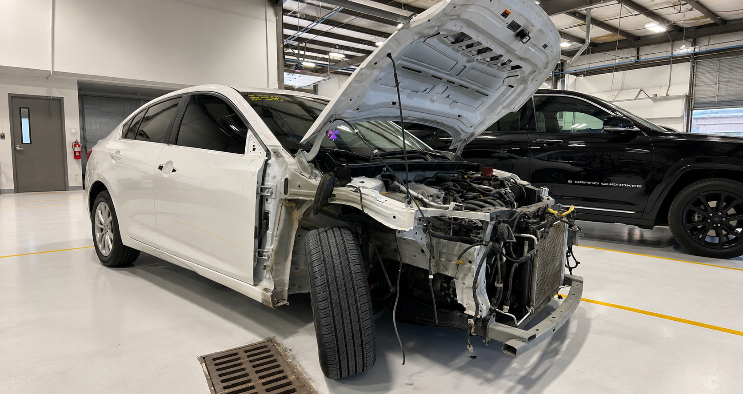
A direct deer strike is typically processed under comprehensive coverage. Depending on the severity and location of the impact, damage may involve the bumper, grille, hood, fenders, headlights, windshield, cooling system, or safety technology positioned toward the front of the vehicle. The comprehensive deductible listed on your policy would generally apply to a covered claim.
If You Swerve and Hit Something Else
The insurance classification can change if you avoid the deer but collide with another object. Indiana Farm Bureau Insurance explains in its guidance on insurance coverage after hitting a deer that a direct deer strike is typically handled under comprehensive, or “Other Than Collision,” coverage. If a driver swerves and hits a tree, guardrail, ditch, or another fixed object, the damage generally becomes a collision claim instead. If another vehicle is involved, liability and fault considerations may also enter the claim. The deer may have created the emergency, but the final point of impact matters when the insurer determines which coverage applies.
What Deductible Applies After Hitting a Deer?
If comprehensive insurance covers the damage, your comprehensive deductible will generally apply.
For example, if covered repairs total $4,000 and your comprehensive deductible is $500, you would normally pay the first $500, and the insurer would cover the remaining amount according to the policy.
Collision and comprehensive deductibles don’t have to match. This becomes important if you swerve and hit another object rather than the deer itself.
Before assuming your out-of-pocket cost, check your declarations page or ask your insurer to confirm the applicable coverage and deductible. It is also useful to ask about towing, rental-car benefits, and the insurer’s inspection or estimating process.
Is Hitting a Deer Considered an At-Fault Accident?
A direct deer strike is generally treated as a non-at-fault comprehensive loss, rather than the same type of at-fault collision that might result from one driver causing a crash with another vehicle.
That distinction does not guarantee that an insurance premium can never change after a claim.
The Indiana Department of Insurance notes that insurance companies may consider factors such as driving record, place of residence, deductibles, vehicle type, and claims history when establishing rates. Individual companies also apply their own underwriting rules.
The more accurate takeaway is:
Hitting a deer is usually considered a non-at-fault event, and comprehensive insurance typically covers the damage, subject to your policy and deductible.
Your insurer can explain how a specific claim may affect your individual policy.
What Happens If You Swerve to Avoid a Deer?
A sudden evasive maneuver can turn an animal encounter into a more serious crash. The Indiana Department of Natural Resources specifically advises drivers not to swerve to avoid a deer, because swerving can send a vehicle off the road or into oncoming traffic. When conditions allow, braking while maintaining control is generally safer than making an abrupt steering movement.
From an insurance standpoint, the distinction is also important:
- Directly hit the deer: typically comprehensive coverage
- Swerve and hit a tree, guardrail, or similar object: typically collision coverage
- Swerve and hit another vehicle: collision coverage may apply to your vehicle, while liability and fault issues may also need to be determined.
After any accident, describe what actually happened rather than simply referring to it as a “deer accident.”
How Common Are Deer Collisions in Indiana?
According to the Indiana DNR’s 2025 White-Tailed Deer Report, 17,835 deer-vehicle collisions were reported statewide in 2025, up from 16,337 in 2024. The agency also reports that deer collisions are most likely from September through December, particularly in October and November, when deer movement increases.
Drivers should be especially alert:
- Around dawn and dusk
- Near wooded areas and agricultural fields
- Where roads divide feeding and cover areas
- During foggy, wet, or icy conditions
- When one deer has already crossed the road, since others may follow
These conditions don’t make every collision preventable, but recognizing when deer activity is highest can give drivers more time to slow down and react.
Why a Deer Strike Can Cause More Damage Than You See
A deer collision often affects the front of the vehicle, where many structural, mechanical, and electronic components are concentrated. Visible damage may include a cracked bumper, dented hood, broken grille, or damaged headlight. Behind those exterior parts, however, the impact may also reach:
- Bumper reinforcement
- Radiator supports
- Radiators and condensers
- Cooling fans
- Hood-latch components
- Wiring and connectors
- Parking sensors
- Radar units
- Sensor mounting brackets
- Structural attachment points
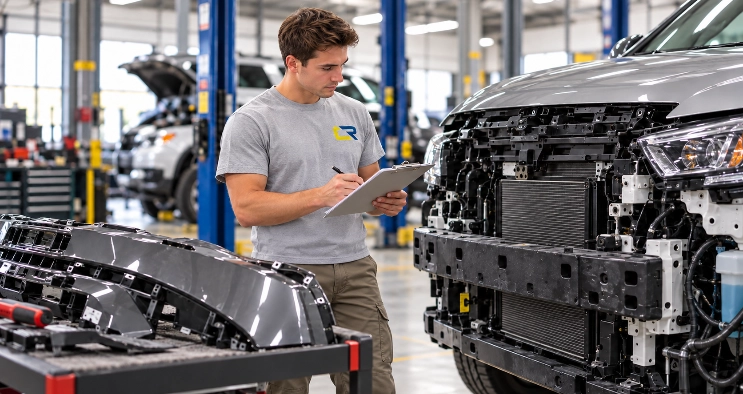
Modern vehicles may also use Advanced Driver Assistance Systems, or ADAS, with radar and camera components positioned around the bumper, grille, windshield, or mirrors. If an impact damages or shifts these components, manufacturer procedures may call for diagnostic scanning, inspection, alignment work, or calibration. At Collision Restoration, an inspection after a deer impact looks beyond visible panel damage to determine whether surrounding structural, cooling, mechanical, or electronic components were also affected. That is especially important when the vehicle appears drivable, but the impact occurred near systems hidden behind the exterior bodywork.
What to Do After Hitting a Deer in Indiana
After an animal collision, prioritize securing the scene and determining whether anyone is injured. Once you address immediate safety concerns, documenting the accident and avoiding additional vehicle damage can make the next steps easier.
1. Move to a Safe Location
If you can move the vehicle safely, pull to the side of the road and turn on your hazard lights. Avoid standing in a traffic lane, particularly at night or on rural roads where visibility may be limited.
2. Do Not Approach the Deer
An injured deer can be unpredictable even if it appears unable to move. Indiana DNR advises motorists not to approach a deer after a collision. Instead, contact law enforcement and follow their instructions.
3. Contact Police
Indiana DNR recommends calling police after hitting a deer. Law enforcement can address an injured animal or roadway hazard and document the incident.
4. Photograph the Vehicle
If conditions are safe, photograph the overall vehicle and the damaged areas. Useful images may include the bumper, hood, grille, headlights, windshield, wheel area, visible fluid leaks, and debris associated with the collision.
5. Determine Whether the Vehicle Is Safe to Drive
Arrange for towing if you notice:
- Coolant or other fluid leaking
- Engine overheating
- Loose body panels
- Damaged tires or wheels
- Steering problems
- Airbag deployment
- Significant lighting damage
- Critical warning lights
Front-end impacts can damage the cooling system without immediately turning off the engine. Continuing to drive an overheating vehicle can turn collision damage into a much larger mechanical problem.
6. Report the Claim
Contact your insurer and explain exactly how the accident occurred. Confirm whether comprehensive or collision coverage applies, the deductible, towing or rental benefits, and how the insurer wants the vehicle inspected.
7. Have the Vehicle Professionally Inspected
An inspection can identify damage beyond what was visible at the scene, including bumper reinforcement, cooling components, structural mounting points, headlights, wiring, sensors, and other equipment.
The first insurance estimate may therefore be a starting point, not the complete repair plan.
Can the Final Collision Repair Cost Be Different From the First Insurance Estimate?
Yes.
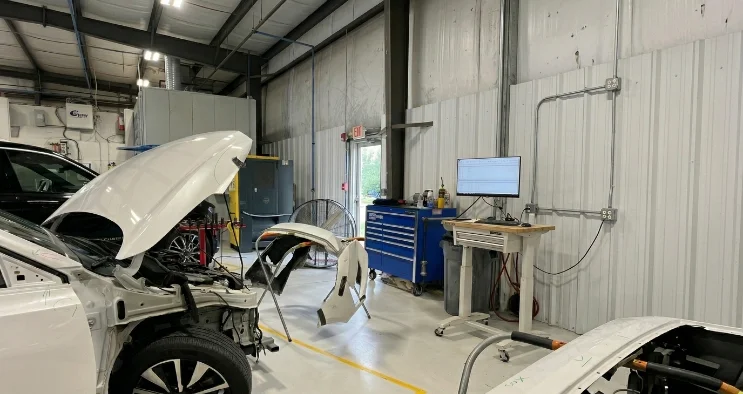
An initial insurance estimate may be based primarily on visible damage. Once technicians remove damaged components, additional problems may become apparent.
For example, removing a bumper cover could reveal a damaged reinforcement, mounting bracket, cooling component, or radar sensor that could not be fully evaluated beforehand. The repair facility may then submit a supplement documenting the additional damage and repair work for the insurer to review.
A supplement does not necessarily mean the original estimate was incorrect. Some collision damage cannot be confirmed until the vehicle is disassembled.
What matters is documenting and explaining the additional repairs.
Frequently Asked Questions About Hitting a Deer in Indiana
Is hitting a deer covered by comprehensive or collision insurance?
A direct deer strike is typically covered under comprehensive. If you swerve and hit a tree, guardrail, ditch, or another object, collision coverage generally applies instead. Your policy determines final coverage.
Does liability-only insurance cover deer damage to my car?
Generally, no. Liability coverage is designed primarily to address injuries or property damage you cause to others. Damage to your own vehicle from directly hitting a deer typically requires comprehensive coverage.
Will hitting a deer increase my insurance rate?
Not automatically in every case. Deer strikes are generally treated as non-at-fault comprehensive claims, but insurance companies use different underwriting rules and can consider claims history and other factors when establishing rates.
Should I swerve to avoid a deer?
Indiana DNR advises against swerving because it can cause a more serious crash with another vehicle or fixed object. When possible, brake while maintaining control of your vehicle.
Do I need to call police after hitting a deer?
Indiana DNR recommends contacting police following a deer collision. Police can help address the animal, roadway hazards, and accident documentation.
Can hitting a deer damage ADAS sensors?
Yes. Radar, cameras, parking sensors, and their mounting components may be positioned around areas commonly damaged in a deer strike. Whether diagnostic scanning or calibration is required depends on the vehicle and the repairs performed.
Conclusion
If you hit a deer directly in Indiana, comprehensive insurance typically covers the resulting vehicle damage if your policy includes it, and your deductible generally applies. If you swerve and hit another object or vehicle, collision coverage and fault considerations may apply. After the impact, focus first on getting to a safe location. Do not approach the animal; contact police; document the damage when it is safe; notify your insurer; and avoid driving the vehicle if there are signs of cooling-system, wheel, steering, structural, or other significant damage. If you need repairs after hitting a deer or another wild animal, Collision Restoration provides collision repair estimates for drivers in Zionsville, Noblesville, and Westfield, Indiana. Visit autocollisionrestoration.com to request an estimate.
Categories
- Accident Recovery (3)
- Auto Maintenance and Car Care (1)
- Auto Parts Guide (2)
- Auto Repair Tips (2)
- Car Care & Maintenance (1)
- Collision Repair Standards (2)
- Consumer Rights (2)
- Industry News & Trends (1)
- Insurance and Claims (1)
- Paintless Dent Repair (1)
- Vehicle Safety & Structural Integrity (2)
- Vehicle Technology and Repair (2)
- Warranty & Peace of Mind (1)